Monday, October 5, 2015

ICE Singapore approved for European clearing while US blocked

ICE Singapore approved for European clearing while US blocked

[LONDON] Intercontinental Exchange's Singapore clearing house, which acts as an important firewall between traders, has been recognized by the European Securities and Markets Authority as meeting the continent's standards, while its US and European units have yet to gain that status.
The central counterparty recognition will allow ICE Clear Singapore to provide clearing services to European companies, ICE said in a statement on Monday. The unit will go live on Nov 17, as will its futures market.
The so-called equivalence decision will help ICE's Singapore unit tap European customers, as they won't be subject to looming capital requirements that are seen as prohibitively expensive. Its European clearing house has yet to gain approval, and its US unit is unable to attain the designation because of disagreements between US and European regulators over clearing standards.
The tangled regulatory web highlights the difficulties the industry and its clients face in making business decisions as they await a final outcome from authorities. Onerous capital requirements for customers using non-recognized central counterparties have been delayed again, this time until Dec 15.
Officials on both sides of the Atlantic have repeatedly clashed over central clearing. The companies stand between traders, holding capital and collateral to ensure losses at a trading firm don't harm its counterparties. Their widespread use is seen as a vital reform to prevent a repeat of the 2008 crisis, when interconnections between firms threatened the financial system.
The regulatory squabble concerns whether US standards are robust enough to satisfy the European Commission, and whether discrepancies would give a region or a company an unfair advantage. A failure to achieve recognition could hurt European Union banks, which would have to hold more capital for cross- border trading. It could also be a problem for the competitiveness of clearinghouses if they're disadvantaged by their home country's rules.
In the EU, the commission determines if another country's rules are as strong as the 28-nation bloc's own standards, known as equivalence decisions. Its officials have been engaged in more than two years of talks with the US Commodity Futures Trading Commission on derivatives rule clashes.
Australia, Hong Kong, Singapore and and Japan have been granted equivalence status, while the US has been left out so far.
Singapore is central to ICE's strategy for building its business in Asia. The company, which owns futures markets in the US and Europe, bought Singapore Mercantile Exchange for US$150 million. The futures products available at launch on ICE Futures Singapore will be Brent crude oil, gasoil, gold and two contracts tied to the Chinese currency. China's securities regulator in March expressed concern to Singapore over ICE's plans to offer cotton and sugar futures.
BLOOMBERG

HKEx says no change to listing rules that drove Alibaba IPO away

HKEx says no change to listing rules that drove Alibaba IPO away


[HONG KONG] The Hong Kong stock exchange said on Monday it would not seek to change listing rules that were one of the main reasons that drove Alibaba Group Holding to list its US$25 billion initial public offering in New York and not Hong Kong last year.
In a statement, the Hong Kong Exchanges and Clearing (HKEx) said its listing committee had agreed the exchange should not pursue a plan to introduce so-called weighted voting rights for primary listings due to opposition from Hong Kong's stock market regulator. "Whilst the Listing Committee continues to believe that this is an important topic for Hong Kong and one that deserved the full attention of the Hong Kong market, it does not believe that progress can be made, currently, on a workable proposal," the statement said.
The Hong Kong Securities and Futures Commission (SFC) said in June that its board had unanimously concluded it did not support the draft proposal put forward by the HKEx due to concerns over investor protection.
REUTERS

Global business growth at weakest pace this year in Sept: PMI

Global business growth at weakest pace this year in Sept: PMI

[LONDON] Global business growth slowed to its weakest pace this year in September as demand faltered despite firms cutting prices for the first time since January, a survey showed on Monday.
JPMorgan's Global All-Industry Output Index, produced with Markit, slumped to 52.8 in September from August's 53.9, its lowest level since December. It has however held above the 50 mark that divides growth from contraction since October 2012. "The latest PMI surveys point to a waning trend in global economic growth at the end of the third quarter, as rates of expansion softened in both the manufacturing and service sectors," said David Hensley, a director at JPMorgan.
A global PMI covering the service industry staged a similar fall, coming in at 53.5 compared to August's 54.6. A sister survey last week showed global manufacturing continued to record lacklustre growth at the end of the third quarter.
The global sub-index measuring output prices slipped to 49.8 from 50.2, its lowest reading in over three years.
The global PMIs combine survey data from countries including the United States, Japan, Germany, France, Britain, China and Russia.
REUTERS

OECD reveals plan for tax clampdown on multinationals

OECD reveals plan for tax clampdown on multinationals

[PARIS] The world's advanced economies announced Monday a long-awaited plan to close the loopholes on tax-avoiding multinationals that cost countries more than US$100 billion a year, declaring: "Playtime is over."
Low tax bills for big names such as Google and McDonald's, which managed to sharply reduce the amount due while remaining within the law, have provoked public outrage in recent years.
Now, the wealthy nations' policy advisory group, the Organisation for Economic Cooperation and Development, has revealed its final recommendations: a 15-point plan to prevent firms from exploiting different countries' tax rules.
The charity Oxfam decried the scheme as a "toothless" package that will do nothing to stop poor nations being cheated out of billions of dollars. Businesses fretted it could lead to double taxation.
But the OECD was confident the plan would be effective.
"Playtime is over," Pascal Saint-Amans, who supervised the drawing up of the so-called Base Erosion and Profit Shifting (BEPS) plan, told AFP.
Companies will find it harder and harder to game national tax systems, Saint-Amans predicted.
"Today, there are wide open roads. Tomorrow, those who want to bypass their taxes will have to do so undercover. We are covering the ground with radars," he said.
The anti-tax avoidance plan, which applies to international companies with revenues of at least 750 million euros, is to be submitted for approval by the Group of 20 top world economies at a meeting of finance ministers next week.
It will then go to a G20 leaders' summit in November for their endorsement.
The OECD calculates that national governments lose US$100-240 billion, or 4-10 per cent of global tax revenues, every year because of the tax-minimising schemes of multinationals. Saint-Amans described that as a "very conservative" figure.
The 15-point plan seeks to oblige multinationals to pay tax in the country where their main business activity is based.
The package represents "the first substantial - and overdue - renovation of the international tax standards in almost a century," the 34-nation, Paris-based OECD said in its report.
The OECD says the scheme will: - Stop companies exploiting differences in national tax rules and bilateral treaties, for example to win no-tax status in two places at once.
- Prevent companies from shifting profits to lower-taxation countries where their foreign subsidiaries are based, or from using technicalities to declare they are based in low-tax jurisdictions.
- Close loopholes that let companies shift debt within a group towards higher-tax countries, allowing them to declare lower profits there.
- Oblige multinationals to detail their business country by country to the tax authorities.
The OECD called for a multilateral deal by the end of 2016 enabling countries to update bilateral tax treaties in line with the new plan without the need to renegotiate them one by one.
It offered no action specific to the digital economy - everything from Internet shopping to high-speed financial market traders - but said it was a high-risk area, which has been tackled within the overall plan.
Not everyone was convinced by the plan, which comes near a year after "LuxLeaks" revelations that some of the world's biggest companies - including Pepsi and Ikea - had lowered their tax rates to as little as one percent in secret pacts with tax authorities in Luxembourg.
"Rich governments are all bark and no bite when it comes to corporate tax dodging," said Oxfam France's advocacy officer on tax and justice, Manon Aubry.
The OECD plan "will not stop multinational companies cheating poor countries out of billions of dollars in taxes - money which is desperately needed to tackle poverty and inequality," Aubry said in a statement.
Developing countries played no formal role in developing the plan, she added.
"As a result, it fails to properly address the needs of poor countries and only goes a small way towards reforming a dysfunctional global tax system that facilitates corporate tax dodging." The OECD package failed to legislate for multinational companies to have pay tax where they do real business or to stop the use of tax havens, while allowing some "harmful" tax regimes to remain in place until 2021, she said.
Businesses worried, however, that the OECD plan could lead to some firms paying their taxes twice.
"Business does still have concerns that some of the recommendations may lead to double taxation of income, and many important details remain to be worked out," said Will Morris, chairman of the tax committee of the Business and Industry Advisory Committee to the OECD.
Despite its reservations, the business committee said in a statement that there was a "legitimate public concern" about companies paying no taxes in different jurisdictions. The OECD plans "appropriately respond to those concerns", it said.
AFP

IMF says China can manage slowdown, needs to communicate policy

IMF says China can manage slowdown, needs to communicate policy

[LIMA] China has the capacity to manage its economic slowdown but needs to communicate policy more effectively and guard against potential spillovers, the International Monetary Fund said on Monday.
In a report, the Fund - whose annual meeting starts this week in Peru - said that it viewed China's currency exchange rate to be in line with "medium term" fundamentals after what it said was a depreciation of around three per cent in the yuan in August.
The depreciation came after China surprised global markets by devaluing the yuan by nearly 2 per cent on Aug 11, and sparking fears of a global currency war.
The Fund said China needed to expand market forces to return to sustainable growth and to implement effective governance. "This will require, in particular, hardened budget constraints for both state-owned and private firms, and continued strengthening of the financial supervision framework," it said.
The Fund calculates that every percentage point slowdown in China's growth translates into a 0.3 per cent decline for other Asian countries, although it noted that the impact of China's slowdown had likely been exacerbated by declines in its financial markets in recent months.
A summer rout in Chinese stocks and the unexpected devaluation of the yuan, also known as the renminbi, rattled global financial markets and raised concerns about Beijing's policy-making and its ability to steer its economy through a rough patch. "Spillovers have been magnified by forces that extend beyond China's border - including falling commodity prices and the prospect of an increase in US interest rates - which could produce downward pressure on Asian neighbours," the report said.
China is looking at plans to curb currency speculation as it seeks to quicken the process of making the yuan trade freely, a deputy central bank governor said last week.
Beijing will further open up its capital markets and develop its foreign exchange market as it aims to "accelerate the renminbi convertibility on the capital account", Yi Gang wrote in an article published in China Finance magazine, a central bank publication.
REUTER
S

Pacific trade negotiators reach landmark deal, fight for approval to follow

Pacific trade negotiators reach landmark deal, fight for approval to follow


[ATLANTA] Pacific trade ministers have reached a deal on the most sweeping trade liberalization pact in a generation that will cut trade barriers and set common standards for 12 countries, an official familiar with the talks said on Monday.
Leaders from a dozen Pacific Rim nations are poised to announce the pact later on Monday. The deal could reshape industries and influence everything from the price of cheese to the cost of cancer treatments.
The Trans-Pacific Partnership would affect 40 per cent of the world economy and would stand as a legacy-defining achievement for US President Barack Obama, if it is ratified by Congress.
Lawmakers in other TPP countries must also approve the deal.


The final round of negotiations in Atlanta, which began on Wednesday, had snared on the question of how long a monopoly period should be allowed on next-generation biotech drugs, until the United States and Australia negotiated a compromise.
The TPP deal has been controversial because of the secret negotiations that have shaped it over the past five years and the perceived threat to an array of interest groups from Mexican auto workers to Canadian dairy farmers.
Although the complex deal sets tariff reduction schedules on hundreds of imported items from pork and beef in Japan to pickup trucks in the United States, one issue had threatened to derail talks until the end - the length of the monopolies awarded to the developers of new biological drugs.
Negotiating teams had been deadlocked over the question of the minimum period of protection to the rights for data used to make biologic drugs, made by companies including Pfizer Inc, Roche Group's Genentech and Japan's Takeda Pharmaceutical Co.
The United States had sought 12 years of protection to encourage pharmaceutical companies to invest in expensive biological treatments like Genentech's cancer treatment Avastin. Australia, New Zealand and public health groups had sought a period of five years to bring down drug costs and the burden on state-subsidized medical programs.
Negotiators agreed on a compromise on minimum terms that was short of what US negotiators had sought and that would effectively grant biologic drugs a period of about years free from the threat of competition from generic versions, people involved in the closed-door talks said.
The Washington, DC-based Biotechnology Industry Association said it was "very disappointed" by reports that US negotiators had not been able to convince Australia and other TPP members to adopt the 12-year standard approved by Congress. "We will carefully review the entire TPP agreement once the text is released by the ministers," the industry lobby said in a statement.
A politically charged set of issues surrounding protections for dairy farmers was also addressed in the final hours of talks, officials said. New Zealand, home to the world's biggest dairy exporter, Fonterra, wanted increased access to US, Canadian and Japanese markets.
Separately, the United States, Mexico, Canada and Japan also agreed rules governing the auto trade that dictate how much of a vehicle must be made within the TPP region in order to qualify for duty-free status.
The North American Free Trade Agreement between Canada, the United States and Mexico mandates that vehicles have a local content of 62.5 per cent. The way that rule is implemented means that just over half of a vehicle needs to be manufactured locally. It has been credited with driving a boom in auto-related in investment in Mexico.
The TPP would give Japan's automakers, led by Toyota Motor Corp, a freer hand to buy parts from Asia for vehicles sold in the United States but sets long phase-out periods for US tariffs on Japanese cars and light trucks.
The TPP deal being readied for expected announcement on Monday also sets minimum standards on issues ranging from workers' rights to environmental protection. It also sets up dispute settlement guidelines between governments and foreign investors separate from national courts.
REUTERS

American Apparel has filed for bankruptcy

American Apparel has filed for bankruptcy

American ApparelFlickr/Sherwin Huang
The troubled teen apparel retailer American Apparel Inc. filed for voluntary Chapter 11 bankruptcy protection on Monday and said it had reached a restructuring support agreement with most of its secured lenders.
American Apparel said it would continue to operate its business throughout the process with its retail stores, wholesale, and US manufacturing operations continuing without interruption.
The retailer said it expected to cut its debt to $135 million from $300 million, as the restructuring will eliminate more than $200 million of bonds in exchange for equity in the reorganized company.
"By improving our financial footing, we will be able to refocus our business efforts on the execution of our turnaround strategy," CEO Paula Schneider said in a statement.
Under the restructuring agreement, American Apparel's secured lenders will provide about $90 million in debtor-in-possession financing, the company said.
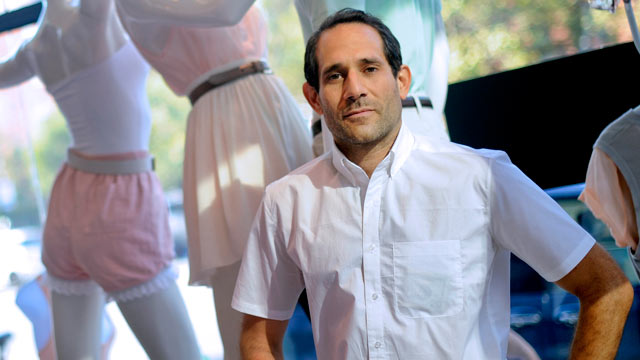
American Apparel, founded in 1989 by Dov Charney whose "Made in America" mantra found huge favor among young shoppers, has been in disarray after it fired Charney in December on accusations of misconduct.
dov charney ceo american apparelABC NewsDov Charney.
Charney has since filed several lawsuits against the company, accusing it of defamation and breach of employment contract.
The Los Angeles-based retailer, known for making its products in the US, has not turned a profit since 2009.
In August, the company raised going concern doubts, saying it may not have enough capital to sustain operations for the next 12 months as losses widened and cash flows turned negative.
American Apparel said it expected to complete the restructuring within six months.
The case is in US Bankruptcy Court, District of Delaware, Case No: 15-12055. 
(Reporting by Supriya Kurane in Bengaluru; Editing by Gopakumar Warrier)
Read the original article on Reuters. Copyright 2015. Follow Reuters on Twitter.

The FTSE 100 just had a huge day thanks to Glencore

The FTSE 100 just had a huge day thanks to Glencore

Shares in the commodities trading and mining giant Glencore show no sign of settling down and a huge jump for the company helped the FTSE 100 to its best day in over a month.
The FTSE 100 just closed in London up 2.57%, or 157.75 points at 6,287.73.FTSEglenGoogle Finance
The big jump was pretty much all down to Glencore, which ended trade on Monday up a crazy 21.04% at 114.99p. The rise helped other mining companies bounce too.
The craziness began in Hong Kong, where shares in Glencore jumped as much as 70% on Monday after reports over the weekend that the company's management would listen to takeover offers.
glenhkGoogle Finance
The Telegraph reported on Saturday that Glencore "would listen to offers for a takeover of the entire company but its management does not believe there are any buyers willing to pay a fair value for the business in the current market."
Even though it's far from a concrete offer and it sounds as if management is pretty dismissive at the moment, it's enough to get speculators excited.
Glencore's main shares are listed in London, and there they opened up by as much as 20% on Monday.
glenlonGoogle Finance
Glencore quickly moved to put a halt to all this takeover chatter. The company put out a statement in Hong Kong, also issued in London, saying (emphasis ours):
The board of directors ("Directors") (the "Board") of Glencore plc (the "Company") has noted today's increases in the price and trading volume of the shares of the Company. Having made such enquiry with respect to the Company as is reasonable in the circumstances, the Board confirms that it is not aware of any reasons for these price and volume movements or of any information which must be announced to avoid a false market in the Company's securities or of any inside information that needs to be disclosed under Part XIVA of the Securities and Futures Ordinance (Chapter 571 of the Laws of Hong Kong).
So, a big fuss over nothing according to Glencore.
Shares pulled back to around a 6% gain but began rallying again around lunchtime. Trading has been halted twice because of excessive volatility. The rise corresponded with a recovery for copper prices, a key metric Glencore's fate is linked to.
Glencore shares have been going crazy over the past week, and the feeling in the City is that Glencore is definitely "in play" — vulnerable to a takeover bid.
Stock dived at the start of last week, falling 29% in just one day, amid fears over how the company would cope with its huge $100 billion debt pile given low copper prices.
But Glencore shares had staged a dramatic comeback by the end of the week after the companyreassured shareholders that it wasn't under any balance-sheet pressure and management bought more shares.
While the value has recovered, Monday's big move shows it's still far from stable.
Citi suggested last week that Glencore could pull off a management buyout and take the company private again, but The Telegraph's sources say CEO Ivan Glasenberg is "dismissive" of this idea.

Top activist investor Nelson Peltz just disclosed a massive $2.5 billion stake in GE

Top activist investor Nelson Peltz just disclosed a massive $2.5 billion stake in GE

Nelson Peltz's Trian Fund Management said it had bought $2.5 billion in General Electric shares since May, making it one of the company's top 10 shareholders.
With a beneficial ownership of 98.5 million GE shares, the company is now Trian's largest investment, the activist-investor firm said in a statement on Monday.
Trian, which now has a roughly 1% stake in GE, has not asked GE for a board seat, but it has called for GE to step up cost cuts, consider getting rid of even more of its finance arm, and be more cautious on acquisitions.
"Trian believes GE has significant long-term potential and that its implied target value per share, including dividends, could be $40 to $45 by the end of 2017 based on our view that GE can deliver EPS of at least $2.20 in 2018," Ed Garden, chief investment officer of Trian, said.
GE shares closed at $25.47 on Friday on the New York Stock Exchange.
The US conglomerate said in April it would seek to sell some $200 billion of its GE Capital assets as it moves away from financial services and focuses more on manufacturing jet engines, power turbines, and other big-ticket industrial equipment.
Over the past couple of years, Peltz has targeted DuPont and PepsiCo Inc. among others, demanding board seats and asking them to separate their fast-growing businesses from the ones where growth had stagnated.
Before the wave of activist campaigns during the past few years, companies often resisted the approach of activist hedge funds, thwarting their efforts to shake up management or restructure their businesses. But the growing cash piles and clout amassed by activists have granted them more board access.
Here's a statement from GE:
We welcome Trian's significant investment in the Company. GE maintains an open dialogue with our shareholders and enjoys productive, collaborative relationships with them. I have known Trian Principals Nelson Peltz and Ed Garden for many years. Trian has a strong track record of working with companies to build long-term shareholder value, and has been an engaged shareholder. We appreciate their perspectives and look forward to a constructive ongoing dialogue with Trian as we execute our strategy to reshape the Company.
GE is focused on improving margins and returns, reducing costs and the size of corporate, returning capital to shareholders and realigning our portfolio, most recently with the announced exit of most of GE Capital. Significantly, we have a plan to return more than $90 billion to investors through 2018 and are on track to complete our goal of closing $100 billion of GE Capital asset sales in 2015. We are transforming GE into a focused infrastructure and technology company, leading the intersection of the physical and analytical worlds.
Our businesses are performing well in a volatile environment. In the second-quarter earnings announcement, GE raised its full-year Industrial operating earnings per share guidance to $1.13-1.20 and is on track for that goal.  We are confident our strategy will further enhance shareholder value and continue to position GE for long-term growth and success.
Read the original article on Reuters. Copyright 2015. Follow Reuters on Twitter.

We just got the biggest sign yet that Britain's economy could be heading for a slowdown

We just got the biggest sign yet that Britain's economy could be heading for a slowdown

George Osborne train controlsREUTERS/China DailyBritain's Chancellor of the Exchequer George Osborne (L) sits in the locomotive of a Chinese high-speed built train as he visits the Chengdu East Railway Station in Chengdu, Sichuan province, China, September 24, 2015.
Growth in the UK's most important sector is slowing down, sliding back to levels last seen two and a half years ago.
That's according to Markit's purchasing managers' index (PMI) just out, which came in with a score of 53.3. That's the slowest pace since all the way back in April 2013. Analysts were expecting the PMI to strengthen a little, up to 56 from 55.6 in August. 
The PMI offers a snapshot of a sector for the month that's just finished, well before any official economic data is released. It's based on a poll of businesses, which tell Markit whether they're seeing more or fewer orders, employing people or laying them off, and a number of other similar questions.
As long as the figure is over 50, there's growth — so the UK doesn't look like it's heading into a recession or anything like that. But weaker figures mean weaker growth, and the UK is a services-dominated economy.
A figure of 53.3 indicates growth of just 0.3% in the third quarter, around half the pace the UK has been recording in most quarters in the past couple of years.
weakest servicesMarkit, Business Insider
If that reading reflects the genuine state of the economy, it's going back to a place that nobody wants it to be — the much more stagnant period between the end of 2010 and the middle of 2013. 
Recent revisions to GDP figures have showed that there was no double or triple-dip recession over these years, as was feared at the time. But growth was feeble, unemployment was relatively high and the political atmosphere was increasingly negative for the then-governing Coalition.
Chris Williamson, chief economist at Markit, had this to say:
Weakness is spreading from the struggling manufacturing sector, hitting transport and other industrial-related services in particular. There are also signs that consumers have become more cautious and are pulling back on their leisure spending, such as on restaurants and hotels. Wider business service sector confidence has meanwhile also been knocked by global economic worries and financial market jitters.

Europe's weak growth might have already peaked

Europe's weak growth might have already peaked

Merkel Hollande RenziREUTERS/Andrew Winning
Eurozone services PMIs rolled out on Monday morning — the business surveys give us an early look at what's happening in Europe's massive services industry in September, before any official data comes out.
The flash PMI, based on the early returns of the survey and for which only details of France and Germany are available, came in at 54. The full reading was weaker than expected at 53.7.
That's above the neutral 50 level, indicating growth. But it's also a four-month low for the index, suggesting that Europe's modest growth might have already peaked.
Here's the breakdown:
  • Spain: 55.1 (58.5 expected, 59.6 previous)
  • Italy: 53.3 (54 expected, 54.6 previous)
  • France: 51.9 (51.2 expected, 50.6 previous)
  • Germany: 54.1 (54.3 expected, 54.9 previous)
  • Eurozone total: 53.7 (54 expected, 54.4 previous)
The figure for Spain was particularly disappointing. Markit senior economist Andrew Harker had this to say, suggesting the economy's rapid growth may have peaked: 
While we continued to see solid growth in the Spanish service sector in September, there was a marked easing in the rate of expansion to the lowest in 2015 so far. Combined with a growth slowdown in the manufacturing sector, this suggests that the upturn in Spain may have peaked during the third quarter of the year. The rest of the year will be crucial in determining whether the Spanish economy continues to improve or eases back towards stagnation.

728 X 90

336 x 280

300 X 250

320 X 100

300 X600