Sunday, January 24, 2016

US dollar edges down but close to recent highs; Fed, BOJ in focus

US dollar edges down but close to recent highs; Fed, BOJ in focus

[TOKYO] The US dollar edged down on Monday but remained well off recent lows as markets started the week on a calmer note, and investors turned their attention to upcoming central bank meetings.
The US dollar inched down about 0.2 per cent against its Japanese counterpart to 118.57, but remained not far from a two-week high of 118.88 touched on Friday, just a day after it dropped to a one-year low of 115.97.
The US Federal Reserve is widely expected to leave its federal funds rate unchanged at 0.25-0.50 per cent at the conclusion of its policy meeting on Wednesday.
However, the possibility of cooling inflation and recent global market volatility could prompt the Fed to signal concern about the U.S. and world economic outlooks. "Markets are concerned about both continued tightening and a US recession. They likely only need to worry about one," Andrew Sheets, chief cross-asset strategist at Morgan Stanley wrote in a note to clients. "Were the Fed to remind the market that it remains data-dependent, it could temporarily alleviate some of the pressure on USD," Mr Sheets said.
The Bank of Japan will also conclude a two-day policy meeting on Friday, at which sources familiar with its thinking say it is likely to cut its core consumer inflation forecast for the coming fiscal year to possibly below 1 per cent.
While the BOJ is expected to hold steady this week, downbeat economic reports have increased market speculation of more easing steps this year.
Japanese trade data released early on Friday showed exports skidded 8 per cent from a year earlier, a deeper drop than forecast and down for the third straight month as the slowdown in China and emerging markets took a toll.
Fears of the fallout of the slowing growth in China helped send crude oil prices to 13-year lows last week. The risk-averse mood and volatile markets have led investors to pare bets on any more Fed interest rate hikes on the near horizon, and reduce their dollar positions.
Speculators reduced bullish bets on the US dollar for a fourth straight week through Jan 19, as net longs fell to their lowest level since late October, according to Reuters calculations and the latest data from the Commodity Futures Trading Commission released on Friday.
The euro was up about 0.1 per cent at US$1.0793, but not far from a two-week low of US$1.0776 hit on Thursday after European Central Bank President Mario Draghi's unexpectedly strong hints that the ECB could have additional stimulus measures up its sleeve.
Mr Draghi stressed on Friday the outlook for a gradual economic recovery in the euro zone had not changed, and that the bank had plenty of instruments at its disposal to push meagre euro zone inflation levels higher and was both determined and willing to act.
The dollar index , which tracks the greenback against a basket of six major rivals, was slightly lower at 99.530, but still not far from a more than one-month high of 99.790 touched on Thursday.
REUTERS

Trump would 'love' Bloomberg presidential run

Trump would 'love' Bloomberg presidential run

[CEDAR RAPIDS] Republican presidential frontrunner Donald Trump on Sunday warmly welcomed a mooted run for the White House by Michael Bloomberg, saying he would "love" to go up against the fellow billionaire and former New York mayor.
The New York Times, citing anonymous sources, said Saturday that the 73-year-old Bloomberg is mulling an independent bid for the presidency and is prepared to spend US$1 billion of his personal fortune.
The Republican-turned-independent sees a potential opening should Trump and Democratic candidate Bernie Sanders - who is surging in polls - win their parties' nominations, the sources said.
The media mogul has reportedly set a deadline for a final decision for early March.
Mr Trump, speaking by phone to CBS News a week before the Iowa caucuses, said: "I would love it. I know Michael very well, I'd love to compete against Michael."
Mr Trump, 69, a real-estate mogul and onetime reality TV star, said that Bloomberg "might very well get in the race." "He's very opposite on me with guns and he's opposite on pro-life and he's opposite on a lot of things," he said, speaking to the CBS News programme Face The Nation. "And Michael's been a friend of mine over the years - perhaps we're not friends anymore. You know, he's wanted to do this for a long time and he never pulled the trigger."
Mr Sanders, the leftist Vermont senator who is closing in opinion polls on Democratic frontrunner Hillary Clinton, separately told This Week on ABC that the possible emergence of another billionaire in the race was further proof of "what I have been saying for a long time." "This country is moving away from democracy to oligarchy."
AFP

As China tries to reassure on yuan stability, investors see depreciation

As China tries to reassure on yuan stability, investors see depreciation

[SHANGHAI] Chinese policymakers tried to assure world leaders last week that they have no intention of pushing the value of the yuan down further to gain a competitive advantage. Their most pressing task though is to persuade financial markets.
Investors are far from convinced that the Chinese government wants to hold the yuan steady for long following an unexpected devaluation in August and perceived policy flip-flops, which fuelled financial market jitters that the economy was in worse shape than Beijing had let on.
"It's very dangerous if the market keeps thinking the yuan needs to depreciate more," said a senior portfolio manager at an Asian asset management firm in Hong Kong. "The central bank has successfully stabilised the market for now," he said, declining to be identified because he is not authorised to speak publicly to the media.
"However, I do not think the market expectation of a weaker yuan has been changed and many people believe it will fall around 5 per cent this year." The yuan has already fallen 3 per cent against the dollar following the devaluation, which added fuel to a stocks' slump and flight of capital out China.
China's markets steadied at the end of last year following a flurry of measures by the government, then fell again in January.
For the past week or so, the central bank has held the yuan steady and Chinese officials at the Davos World Economic forum in Switzerland last week said the government had no intention to push the currency down, the latest in a series of similar remarks by China's officials, including Premier Li Keqiang.
DEPRECIATION, NOT DEVALUATION
While China is unlikely to conduct another one-off devaluation any time soon given the global market turmoil it sparked and the barrage of criticism over a perceived failure to communicate policy effectively, markets expect Beijing to allow the currency to fall.
China has spent heavily to discourage speculators - earlier this month state bank currency purchases drove yuan borrowing rates in Hong Kong to record highs - but markets where Chinese policymakers have less influence are pricing in a big depreciation against the dollar.
Offshore non-deliverable yuan forwards, a speculative instrument, are pricing in a 4 per cent fall one year ahead, up from just 2 per cent in mid October.
The pricing also suggests investors see a fall of around 1 per cent in March or April.
Spikes in onshore short-term borrowing costs in recent weeks - despite record cash injections by the central bank - suggest capital outflows are intensifying, some analysts say.
Cash demand rises ahead of the Lunar New Year holiday, falling in February this year, which the central bank acts to offset with temporary cash injections to the banking system. But some economists say this year's big injections - the largest in at least two years last week - reflect central bank attempts to steady domestic liquidity following currency intervention to offset capital outflows.
"While the central bank stated that the liquidity injection is to prepare for possible liquidity shock amid Chinese New Year season, we see that this is primarily to counter the strong capital outflows and the withdrawal of yuan liquidity due to FX market intervention," Zhou Hao, senior emerging markets economist at Commerzbank in Singapore, wrote in a client note.
To be sure, many investors believe the government is not opposed to a weaker currency despite the rhetoric. Gone are the days when Beijing was under international pressure to let the yuan rise as its economy notched up double-digit expansion.
Growth in 2015 was the lowest in more than two decades and is expected to slide further, while the dollar is likely to rise broadly as the United States raises interest rates.
Indeed, the yuan's fall since August is in line with a new policy to manage the yuan against a basket of currencies, but after many years in which it was managed against the dollar, investors are hesitant to accept the change in the absence of more details about how the central bank will manage the currency.
Financial markets need more "clarity and certainty", IMF Managing Director Christine Lagarde said at the weekend.
"I know there's a lot of scepticism out there," said Julian Evans-Pritchard, China economist at Capital Economics in Singapore. "But we think it's mainly a communication problem."
Chen Long, China economist at the Beijing-based consultancy Gavekal Dragonomics, said the new currency policy meant China may tolerate a deeper yuan decline against the dollar. "Its failure to clearly explain this policy is the main reason it has produced so much market turbulence," he said in a client note. "It is crucial for the PBOC to clarify what its definition of 'currency stability' really is," the note said. "We think the political reasons to maintain a very strong renminbi are not as strong as they once were."
REUTERS

More holes than fingers? Beijing struggles to plug capital flight

More holes than fingers? Beijing struggles to plug capital flight

[SHANGHAI] As a slick slide presentation runs for the well-heeled investors jammed into the banqueting hall of Shanghai's Renaissance Yangtze Hotel, an image flashes up of a grinning Chinese man pushing a wheelbarrow full of cash into Europe.
Another slide features a car bearing a Chinese flag preparing to drive into a pit.
For wealthy Chinese, desperate to avoid further falls in a currency that has shed 6 per cent against the dollar since August, the message is clear.
"The yuan will keep depreciating as time goes by, so we should swap the money we have in hand into tangible assets," Li Xiaodong, chairman of Canaan Capital, tells his audience, while exhorting them to pull their money out of China while the going is still good and pour it into property in Spain and Portugal.
Canaan Capital is one of a swarm of asset management firms leaping to profit from Beijing's latest policy headache: the swelling crowd of Chinese individuals and firms trying to get their money out of the world's second biggest economy as its growth slows to a quarter-century low.
Weak real estate prices and the gyrations of the stock market, which plunged as much as 40 per cent in a summer meltdown last year and has tumbled around 17 per cent so far this year, have only encouraged the trend to seek better returns elsewhere.
The risk for policymakers is that so much money will exit China it will undo their efforts to cut the cost of credit domestically and reinvigorate flagging productive investment.
In graphs and numbers, Mr Li's slideshow ran through some of the reasons why many of the 600 or so people who packed into his talk in late December are sceptical that the wobbly economy is turning around soon: an aging society, slowing growth, and the slide of the yuan against the dollar.
"Where was Li Kashing heading? He was heading to Europe," Mr Li quipped, drawing laughs for his reference to the Hong Kong multibillionaire, who has been trimming his exposure at home and buying utilities and telecoms assets in the West.
LEGAL OUTLETS
Thanks to incremental reforms to China's capital account enacted while the yuan was still strong, it is easier than ever for Chinese companies and individuals to get money out legally.
They can buy property, or invest in offshore stocks, bonds or managed hedge funds; they can purchase offshore life insurance that can be used as collateral for further loans, or even buy a foreign company outright.
And their scope is not limited to Europe. One Shanghai-based investment company, Zengda, plans to guide Chinese money into mines, land and gas projects in Africa.
Others use trade and even tourism transactions to get money out of the country - contributing to the US$200 to US$500 billion Chinese tourists are estimated to spend abroad annually.
The trend has grown so rapidly that some international banks are bolstering their wealth management divisions, encouraged by data showing money pouring out of China.
China's central bank and commercial banks sold a net 629 billion yuan (S$136.6 billion) worth of foreign exchange in December, nearly triple the figure for the previous month.
One way of investing money overseas is through the Qualified Domestic Institutional Investor (QDII) pilot programme, which allows Chinese mutual funds to buy offshore stocks.
"Clients come to me now, realizing that hedging makes sense," said a private wealth manager at an international investment bank who spoke on condition of anonymity. "I heard the QDII scheme was so popular that some brokerage firms were charging 6 per cent just to use the quota, but people are still paying. They're afraid of depreciation."
A second investment management source in Shanghai confirmed that the costs of borrowing QDII quota had shot up in recent weeks amid surging demand and short supply.
China Asset Management (Hong Kong) Ltd has recently launched a 150 million yuan (S$32.6 million) hedge fund under QDII to invest overseas and is charging mainland investors 1 per cent annually as a channel fee, in addition to subscription and management fees, according to sales document seen by Reuters.
HAPPY TO HELP
Policymakers fret that, instead of putting money into the research and development China wants to move its firms up the value chain, the executive elite will pour it into the elegant condos in downtown Lisbon that Canaan Capital is selling.
Unfortunately for Beijing, it is going to be very difficult to stem the tide, given many of the channels being used are legal and, in some ways, beneficial.
Beijing has, for example, been trying to make it easier for domestic companies to acquire overseas assets, seen as a way to increase Chinese influence and help firms move up the value chain by acquiring foreign competitors.
Any move to slow capital flight being disguised as M&A could impede strategic investments as well.
Beijing has also been trying to increase the international usage of the yuan, a project that could collapse if foreigners saw their money getting trapped in China.
Moreover, many of the funds are using the free trade zones China has rolled out in the last few years as part of a major reform push, which were specifically designed to make it easier for capital to cross the borders.
As a result, fund managers say that so far Beijing moved cautiously in its efforts to close the taps, halting quota issuance for easily controllable channels such as the QDII programme, for instance, and pressing banks to tighten outflows.
Whether regulators will be forced to go further to defend monetary stability remains in question, but few expect the demand to go away. "The huge level of individual and corporate savings which exist in China at present obviously cannot find a reasonable return on investment in China," said Hao Zhou, Commerzbank analyst in Singapore. "Consequently there is every chance that capital flight can become a long-standing affair."
AFP

Top quotes on the global economy from Davos

Top quotes on the global economy from Davos

Image: WORLD ECONOMIC FORUM/swiss-image.ch
How to steady the ship was high on the Davos agenda.
Davos leaders met at a time of uncertainty for the global economy. Growth in China is slowing, world markets have had a tumultuous start to 2016 and the price of oil has fallen to its lowest level in 12 years.
How to steady the ship was high on the Davos agenda. Here's what some of our participants had to say.
In the session, China's Business Context, economist Nouriel Roubini talked about the "perfect storm" affecting global markets and a possible hard landing for the world's second-largest economy.
In a special address, China's Vice-President Li Yuanchao put the recent market turmoil into perspective and discussed China's transition from a state-led investment and manufacturing-led economy to one more dependent on consumers and services.

It may be time to revisit the way we measure economic success, including GDP and productivity, said IMF head Christine Lagarde in a session on The Global Economic Outlook.

Market jitters will stabilise, but monetary policies alone cannot change the world was the message from Raghuram Rajan in the session, The Growth Illusion.

The economy of tomorrow must be one where wealth is shared, said Sharan Burrow in the session on The Future of Growth.

Let's put China's growth figures - 6.9% for 2015 - into perspective, said Ray Dalio in Where is the Chinese Economy Heading?
Governments can step in to manage volatility if they have to, but there will always be, and should always be, small periods of it,said Lagarde in the same session.

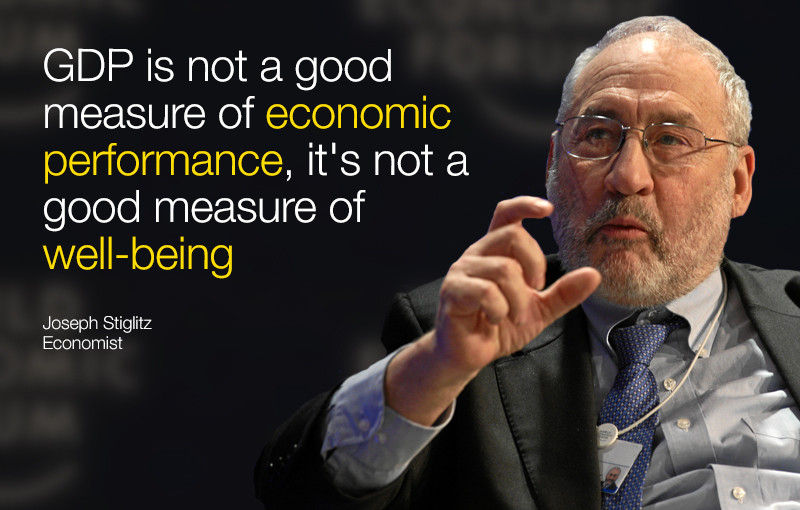
If we're measuring the wrong thing, we're going to end up doing the wrong things, said Nobel economist Joseph Stiglitz in a session on How to Reboot the Global Economy.
  
Author: Ross Chainey. Digital Media Specialist, World Economic Forum

An 'alien megastructure' 1,500 light-years from Earth just got harder for scientists to disprove

An 'alien megastructure' 1,500 light-years from Earth just got harder for scientists to disprove

dyson sphereDanielle Futselaar/SETI International
Three months ago, news broke that a giant "alien megastructure" could exist around a bizarre-looking star 1,500 light-years away.
While the prospect of aliens was first launched by Penn State astronomer Jason Wright, almost everyone in the astronomy community agreed that the chances that this was the case were "very low."
Now, the latest investigations into this strange star by Louisiana State University astronomer Bradley Schaefer have reignited the alien theory, New Scientist reported.
What makes this star, KIC8462852, so bizarre is the drastic changes in light we see from it over time. Many stars experience temporary fluctuations in brightness, increasing and decreasing in luminosity over time, but KIC8462852's changes are severe by comparison.
Between 2009 and 2013, astronomers using the Kepler space telescope discovered that it would sometimes lose up to 20% of its brightness. What's more, the changes didn't follow any obvious pattern.
That would suggest something gigantic must be blocking the light at random times, meaning that it couldn't be a planet or other regular orbiting object because that would generate a distinct pattern of dimming light. It must be something that changes shape over time, thereby blocking different levels of light at random intervals.

It's probably not comets

An alien megastructure, called a Dyson swarm, was suggested as one explanation for what scientists have observed, but the most likely reason astronomers came up with was comets — a giant family of them.
But Shaefer says not so fast.
"The comet-family idea was reasonably put forth as the best of the proposals, even while acknowledging that they all were a poor lot," Schaefer told New Scientist. "But now we have a refutation of the idea, and indeed, of all published ideas."
To make his discovery, Schaefer had to dig deep down into the astronomy archives at Harvard. It turns out, astronomers have data on KIC8462852 dating back as far as 1890.
By analyzing over 1,200 measurements of this star's brightness taken from 1890 through 1989, Schaefer found that the irregular dimming of KIC8462852 has been going on for over 100 years. Schaefer published his findings in the online preprint server arXiv.org.
What's more, he explains in his paper that this "century-long dimming trend requires an estimated 648,000 giant comets (each with 200 km diameter) all orchestrated to pass in front of the star within the last century," which he said is "completely implausible."

So what is it?

By killing the comet theory, Schaefer has brought us one step closer to finding out what is really happening around KIC8462852.
spitzer exoplanet imageNASA/JPL-CaltechAn artist's concept of gas-giant planets in a dusty solar system, similar to how HD 95068 could look.
At the same time, he's also reignited the possibility that the source could be an alien megastructure that an advanced alien civilization has been slowly building over time.
One thing's certain for Schaefer: The bizarre dimmings are probably caused by a single, physical mechanism that's undergoing some type of ongoing change.
"The century-long dimming and the day-long dips are both just extreme ends of a spectrum of timescales for unique dimming events, so by Ockham's Razor, all this is produced by one physical mechanism," Shaefer said in his paper. "This one mechanism does not appear as any isolated catastrophic event in the last century, but rather must be some ongoing process with continuous effects."
Schaefer isn't the only one interested in learning more about KIC8462852.
Late last year, astronomer Doug Vakoch and his team at the new organization called SETI (Search for Extraterrestrial Intelligence) International — not to be confused with the SETI Institute — went hunting for aliens around KIC8462852.
They searched for signals that an alien civilization might be beaming toward Earth either in radio or visible wavelengths, but ultimately they came up empty handed. So, if it is aliens, then they're being awfully quiet.
Read the original article on Business Insider. Copyright 2016. Follow Business Insider onTwitter.
More: Space Tech Science Aliens 

728 X 90

336 x 280

300 X 250

320 X 100

300 X600