Wednesday, July 8, 2015

Greece pointed to exit door as European leaders harden tone


You are here


Greece pointed to exit door as European leaders harden tone


[BRUSSELS] European leaders talked openly about a Greek exit from the euro ahead of a weekend summit on the country's economic future, breaking dramatically with years of denial about the possibility.
Europe has "a Grexit scenario prepared in detail," European Commission President Jean-Claude Juncker said late Tuesday night, hours before Austrian Chancellor Werner Faymann said Greece's Plan B is "another currency." The European Union set a Sunday deadline to reach a deal with Greece on a rescue in exchange for austerity measures and economic reforms, while the country formally requested a new three-year bailout.
The continent's most indebted country is closer than ever to being forced to abandon the euro after its people voted decisively in a July 5 referendum to reject spending cuts and tax hikes. Greece's banks are almost out of cash and its economy is grinding to a halt after Prime Minister Alexis Tsipras imposed capital controls to stem withdrawals, and could collapse entirely without a new lifeline from the European Central Bank.
"Our inability to find agreement may lead to the bankruptcy of Greece and the insolvency of its banking system," said EU President Donald Tusk. Failing to find a deal "will mean the end of the negotiations with all the possible consequences, including the worst-case scenario where everyone will lose." Sunday now looms as the climax of a five-year battle to contain Greece's debts, potentially splintering a currency that was meant to last and throwing more than half a century of European economic and political integration into reverse. German Chancellor Angela Merkel, whose country is Greece's largest foreign creditor, said she is "not especially optimistic" about finding a solution.


Tsipras was in Strasbourg Wednesday as part of his last- ditch campaign to keep Greece in the euro, which he has said is his highest priority.
His government sent a formal request for a new bailout to the European Stability Mechanism, the body that co-ordinates financial assistance to member states. The document asked for a three-year loan facility, and said reforms to taxes and pensions would be implemented starting next week.
"The Greek people didn't deliver a mandate for rupture; they reinforced the mandate for a lasting and just solution," Tsipras told the European Parliament. "My country was turned into a laboratory experiment of austerity. We have to admit that the experiment failed." The reaction of financial markets to the Greek turmoil has been muted, potentially giving creditors a stronger bargaining position.
The path to a euro exit by Greece is unclear. European law treats the euro as "irrevocable" and makes no provision for a country to leave or be pushed out. The likeliest exit mechanism would be for European governments to halt aid to Greece, leading the ECB to stop supplying euros to the country's banks.
The ECB will end its support for Greece if "there is no political accord in sight," board member Christian Noyer said Wednesday in an interview on Europe 1 radio. "Our rules force us to stop completely. We're starting to be very worried." In that event, Greece would be forced to issue IOUs or some other medium of exchange, leading gradually to the creation of a parallel currency to replace scarce euros.
To avoid that outcome, by 8:30 a.m. on Friday Greece must spell out how it will make its economy more competitive and save money in the process. Proposals acceptable to European leaders will almost certainly require it to stomach many of the reforms that Tsipras' Syriza has resisted since coming to power in January, and which Greeks repudiated in their referendum.
Expert assessment of that package would feed into a final set of meetings, culminating in summits of both euro-zone leaders and the broader 28-nation EU on Sunday.
"This is the big one," Malcolm Barr, an economist at JPMorgan Chase & Co. in London, said in a report to clients. "The 'good' news for Greece is that it is being given a clear opportunity to put its proposals in a concrete form and have them evaluated by the rest of the region." Tsipras will have few sympathizers at the summit. Germany, the Netherlands and Finland have anchored the tight-budget camp since the debt crisis broke out in 2010; Ireland and Portugal observed strict conditions to complete their own aid packages and are loath to see Greece get off more easily.
Among large EU countries, only the government of France is striking a more dovish tone toward Greece. French President Francois Hollande has warned about the consequences of setting Greece adrift, and said his motto for handling the Greek crisis is "responsibility, solidarity, speed."
BLOOMBERG

Greek island agrees to test digital currency

Greek island agrees to test digital currency

9
COMMENTSJoin the Discussion
The political crisis in Greece makes a government solution unlikely, so I have helped create a private solution. I think Greece could use blockchain technology to create an asset-backed digital currency that would act as a complement to the current currency regime. A parallel currency can kick-start the Greek economy and avert a humanitarian disaster.
The Greek people were correct to vote "no" on the referendum on debt-repayment terms. Austerity has pushed Greece into a depression – more austerity will exacerbate the situation. The solution to the Greek problem is writing off a portion or all of the debt. While this had been a non-starter for the European Central BankInternational Monetary Fund and European Union, just last week the IMF conceded that Greece's debt load was unsustainable. So now what?
Agistri, Greece
Source: Agistri
Agistri, Greece
Over the next several weeks the ECB, IMF and EU will renegotiate with Greece, but unless they acquiesce to a debt haircut (being repaid less than they loaned), the talks will be futile. In the meantime, it is the Greek people who will suffer. Without a banking system and access to cash, citizens have found themselves short of essential items like prescription drugs. The larger problem is that faith in the banking system has been shattered. Much like during the Great Depression in the U.S., generations of Greeks will not trust keeping funds in banks. During America's Great Depression the only choice for frightened citizens was to hide cash under the mattress — today, we can use the technology behind bitcoin to create a store of value that is independent of the traditional banking system. 
The digital currency I created last year, Nautiluscoin, was designed to tackle this specific task. Blockchain technology has progressed rapidly over the last 12 months and we can now offer Greece a digital currency that is backed by gold and is integrated into a mobile-banking platform.
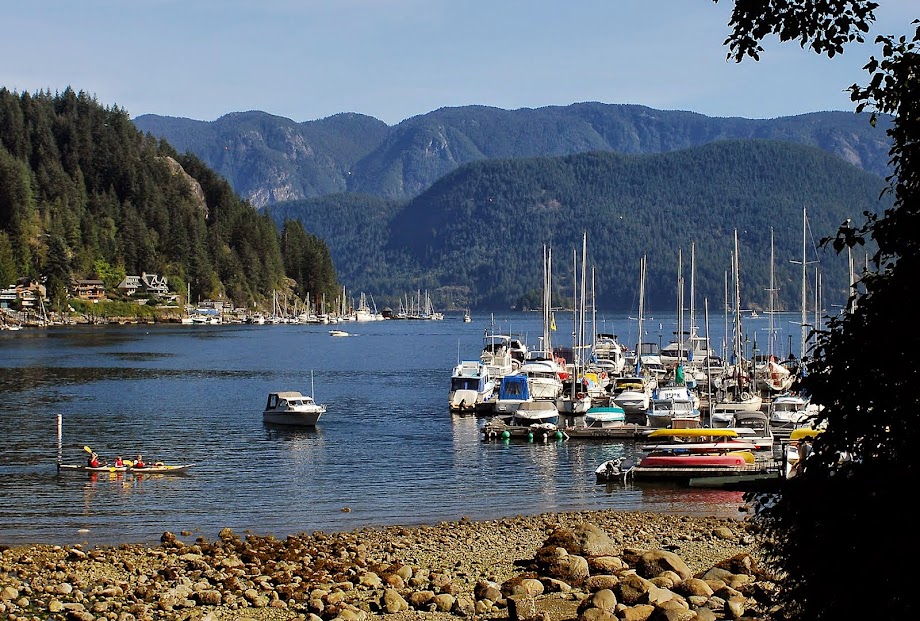
The mayor of the Greek island of Agistri has agreed to allow the island to be a pilot program for a new monetary ecosystem, which will use Nautiluscoin. Agistri is a small island in the Saronic Gulf that is ideally located 55 minutes from Piraeus, the largest port in Greece. The combination of the small size and convenient location makes Agistri a perfect candidate for a pilot program. Over the coming weeks, the infrastructure for this project will be rolled out and the citizens of Agistri will receive Nautiluscoin to begin transacting.
Nautiluscoin was originally designed as stable store of value with a "stability fund" that would act as an internal central bank to reduce the notorious volatility associated with digital currencies like bitcoin. After some trial and error, I have discovered what many others have over the last 5,000 years – the most trusted independent form of money is gold.
In order to create a stable store of value backed by gold, we will employ a two-pronged approach for Nautiluscoin. First, the Nautiluscoin Stability Fund will initially retain a majority ownership stake in Nautiluscoin. As the monetary ecosystem grows, these coins will be sold to meet demand. The goal of this program will be to provide a countercyclical monetary policy that will foster an environment that allows for steady growth in purchasing power. 
Using blockchain technology makes it easy to create a currency, but that currency is useless without a banking system. Currently the Greek banking system is effectively shut and it is unclear when or if it will re-open. We are partnering with Coinstructors (a UK digital currency and mobile banking company) who created Drachmae.Money.
Drachmae.Money will charge a fee for each Nautiluscoin transaction. Instead of the fee going to a for-profit entity the revenue generated will be recycled to support the purchasing power of Nautiluscoin. The fees generated will be used by the Nautiluscoin Stability Fund to purchase gold – in this way, as the monetary ecosystem grows the amount of gold backing Nautiluscoin will also grow. Our goal by recycling the fees is to grow the amount of gold backing Nautiluscoin.
Using gold to back Nautiluscoin should give both tourists and merchants assurance that a digital currency is more than just lines of computer code, while utilizing the stability fund to create a countercyclical monetary policy will provide flexibility that gold lacks. Since it is unclear what fiat currency Greece will eventually choose (euro or new drachma), a digital currency like Nautiluscoin can be quickly be deployed to kick-start the tourism industry. We have already begun to implement this plan and estimate that it will take 60 to 90 days to fully execute.
Using Drachmae.Money, tourists will be able to acquire Nautiluscoin in a manner that is fully Know-Your-Customer (KYC) compliant via their mobile phone. Once tourists arrive on the island of Agistri, merchants will be able to accept payment in Nautiluscoin.
Inspired by the WIR Bank in Switzerland, Coinstructors has also createdDrachmae.Connect – a business-to-business platform that will not only allow merchants to exchange services, but also enable tourists to book vacations at a discount. This solution draws inspiration from the highly successful WIR Bank that manages and issues the private currency WIR franc in Switzerland. The WIR Bank was established by two Swiss businessmen in 1934 in response to a failing economy and currency shortages.
While many people think that the Swiss franc is the only currency in Switzerland, the WIR franc has been accepted as payment since 1934. This complementary currency has an 80-year plus history of fueling a business-to-business network.
Allowing the use of Nautiluscoin will immediately infuse capital into the island of Agistri, while the tools of the Drachmae Project will allow tourists and businesses to connect and transact independent of the Greek banking system. The asset backing of Nautiluscoin will give confidence to holders that Nautiluscoin is an independent store of value. 
The Nautiluscoin/Drachmae.Money solution is designed to act as a complement to the existing monetary ecosystem. It is a private solution to a public problem. This is not a vanity project or publicity stunt – I have already and will continue to invest my own money to complete this project – this goes beyond a profit and loss statement. I view this as investing in a new frontier.
Blockchain technology allows for the efficient creation of a complementary currency, while mobile banking provides an ideal independent ecosystem. We aim to be one part of the Greek economic recovery by combining the best of new technology and existing economic systems.
Brian Kelly is founder and managing member of Brian Kelly Capital LLC, a global macro investment firm catering to high net worth individuals, family offices and institutions. He is also the creator of the BKCM Indexes, benchmarks for multi-asset money managers. He's also the author of the upcoming book, "The Bitcoin Big Bang: How Alternative Currencies Are About to Change the World." Kelly, a CNBC contributor, often appears on "Fast Money." Follow him on Twitter @BKBrianKelly.
Disclosure: Brian Kelly is the creator of Nautiluscoin, owns Nautiluscoin tokens and makes a market in Nautiluscoin.

728 X 90

336 x 280

300 X 250

320 X 100

300 X600